
Krasina bet on biodiversity credits before the market did
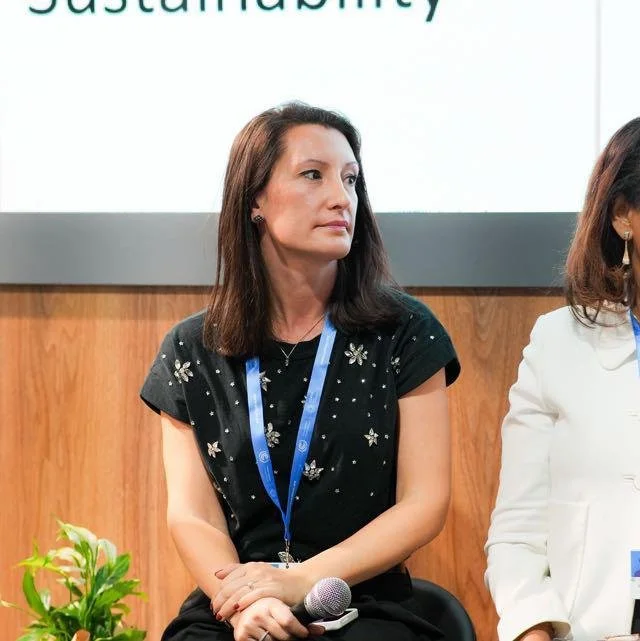
Krasina co-founded DOVU — and now runs it as CEO — to fix a plumbing problem: the people doing the actual conservation work are the last to get paid and the hardest to reach. DOVU built blockchain infrastructure to change that — a marketplace where ecological credits move with full transparency and the money lands where the work happens.
In 2023, when certified biodiversity credits barely existed as a category, DOVU partnered with Savimbo and started selling them. Not as a bet on a trend — as a bet on the communities behind the credit. Three years later, the channel is still running, with sales reported and settled every month.
“Our mission is to make climate action measurable, traceable, and trusted.”

Krasina Mileva, Dovu co-founder & CEO
Brand
DOVU is a UK marketplace and infrastructure layer for ecological credits, built on blockchain and a core contributor to the Hedera Guardian. It lets environmental projects reach buyers directly — carbon, biodiversity, and beyond — with verification and payment recorded on-chain. Co-founded by Krasina Mileva, now CEO, and Irfon Watkins, now Chair, with Matt Smithies as CTO, DOVU's pitch is blunt: cut the intermediaries, channel capital to the people on the ground, make every step auditable.
“Let’s keep pushing for credibility in climate solutions — built on measured outcomes, not proxies.”
PRODUCT
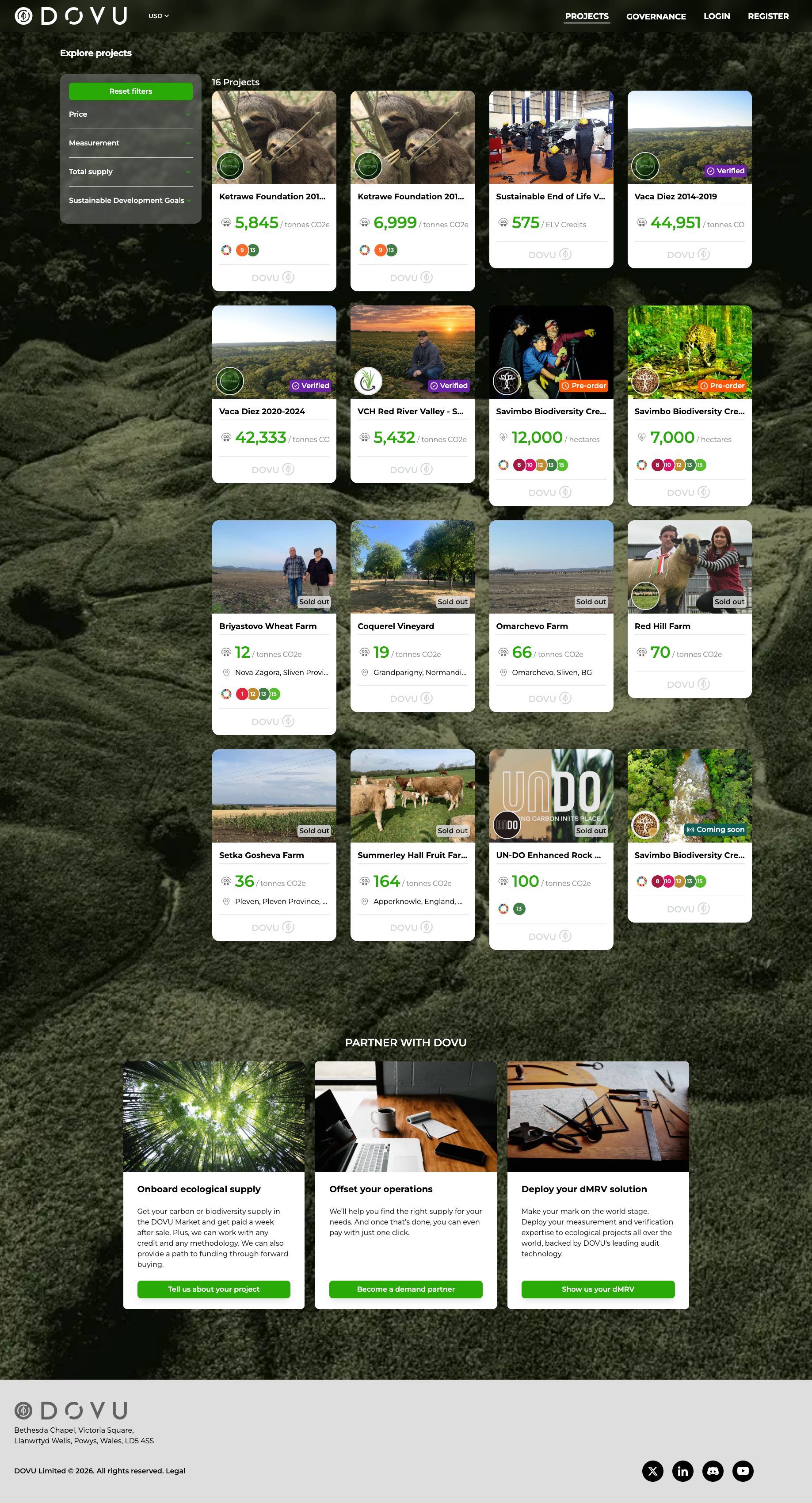
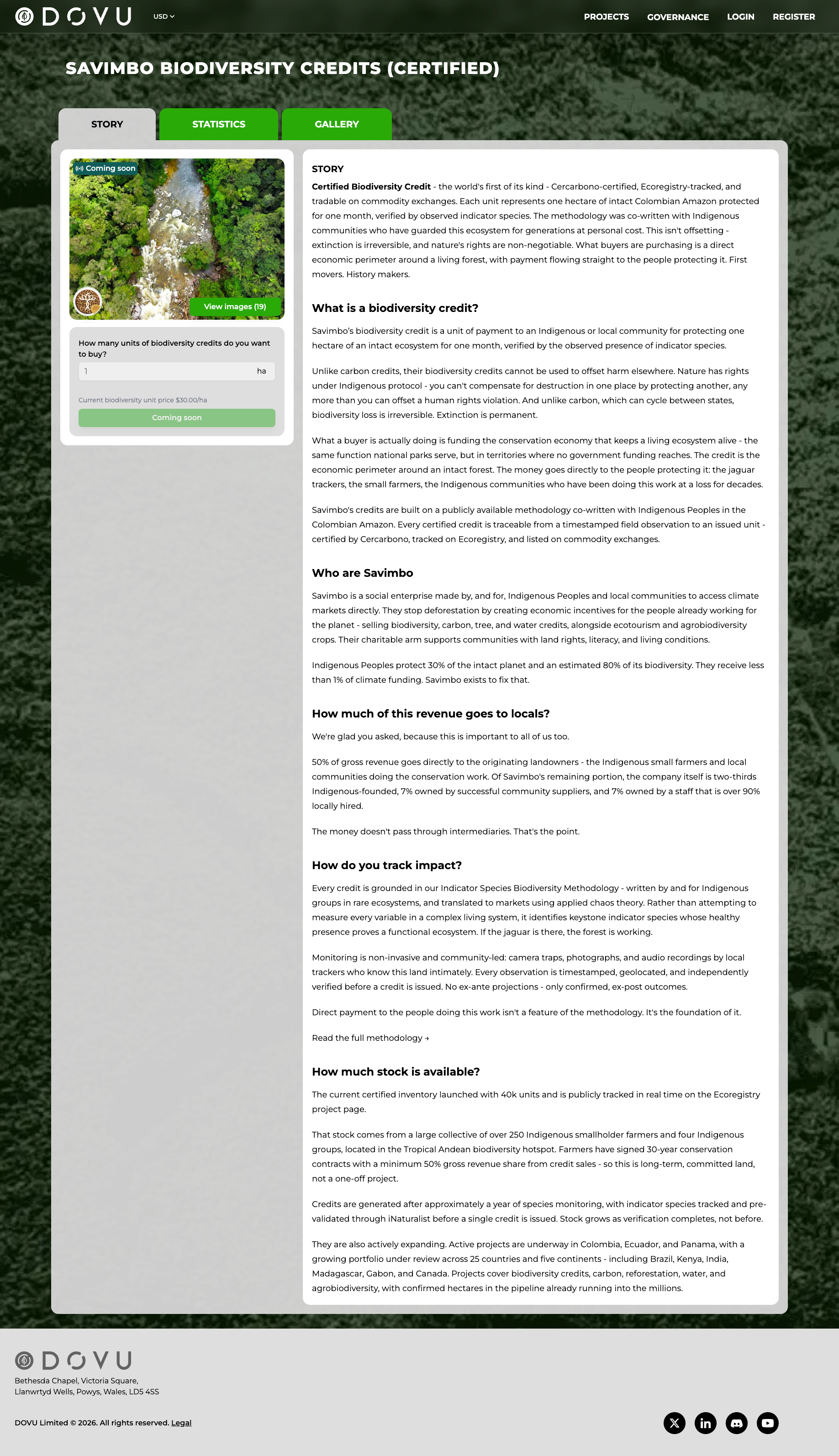
DOVU sells Savimbo's certified biodiversity credits — the world's first of its kind, Cercarbono-certified and EcoRegistry-tracked. Each unit represents one hectare of intact Colombian Amazon protected for one month, verified by observed indicator species. DOVU lists it on its marketplace and records each transaction on-chain, so a buyer anywhere can purchase a Savimbo credit and watch it settle transparently.
The part that matters: DOVU sold these credits as pre-orders at $10 while they were still moving through a multi-year verification process. That forward financing reached the Indigenous partners early — and kept the project viable long enough to become the certified, $30 credit it is today. DOVU isn't the end user. It's the marketplace that funded the work before the market would, and still the only blockchain exchange Savimbo's credits are listed on.
DOVU carries all three of Savimbo's biodiversity product lines:
Certified — $30 tradable / $27 retired. The flagship: fully verified, Cercarbono-certified, EcoRegistry-tracked, and tradable on commodity exchanges.
Pre-certified — $10. Same methodology, verified land title, and full MRV, with final validation stages underway; converts to certified automatically on completion.
+Impact — $6.50. Uncertified by design — for tenure-rights holders whose territories can't qualify for formal certification because they lack full land title. Same verified conservation in the same Colombian Amazon, plus a stand on the titling inequity that locks those communities out.



Positioning
Platforms are the tell. A blockchain marketplace can list anything — so when DOVU chose to carry the world's first certified biodiversity credit, and to put its own pre-order financing behind it before the credit was even certified, that's the category voting with its own infrastructure. DOVU was early, and early is the whole point: they backed the unit before there was a market consensus to hide behind. The credit you can now buy on-chain exists, in part, because a platform decided it should — and paid for it up front.